
High strength and wear resistance for demanding mechanical applications
Spuncast combines the mechanical advantages of the 400 Series stainless steel family with the performance and efficiency of centrifugal casting. The result is custom steel tubing engineered for:
- High strength
- Excellent wear resistance
- Heat-treatable performance
- Lower total cost of ownership
Learn more about our pricing, including our free shipping for first-time customers!
The Real Challenge: Selecting Stainless Steel for Mechanical Performance
Choosing stainless steel isn’t simply a matter of selecting the alloy with the greatest corrosion resistance. In many industrial applications, mechanical performance—not corrosion—is the factor that determines component life.
Components subjected to heavy loading, abrasion, or repeated wear require the right balance of mechanical performance and corrosion resistance to maximize service life.
Our metallurgical team helps customers identify the appropriate cast equivalent and combine the right 400 Series alloy with centrifugal casting to produce high-integrity stainless steel tubing engineered for long service life and a lower total cost of ownership.
Performance That Maximizes Mechanical Reliability

Broad 400 Series Alloy Availability
Spuncast produces cast equivalents of many commonly specified 400 Series stainless steel grades, helping customers maintain material specifications while taking advantage of centrifugal casting. Our metallurgical team can also assist in identifying the appropriate cast equivalent for wrought specifications.
- 410 / CA15
- 420 / CA40
- 430
- CA6NM
- Other ferritic and martensitic grades available upon request
Heat-Treatable Strength
Martensitic 400 Series stainless steels can be heat treated for higher hardness, greater strength, and improved wear resistance. This makes it well suited for components subjected to heavy loading, pressure, and repeated mechanical stress.
- Increased hardness through heat treatment
- Higher mechanical strength
- Improved resistance to deformation
- Excellent for pressure and load-bearing components
Superior Wear Resistance
Many industrial components fail because of abrasion rather than corrosion. The high hardness of martensitic 400 Series grades helps resist wear, maintain critical dimensions, and extend service life in demanding operating environments.
- Outstanding wear resistance
- Maintains edge and surface integrity
- Improved dimensional stability
- Longer component life
Ferritic or Martensitic? Choose the Right Alloy for the Job
The 400 Series stainless steel family includes ferritic and martensitic grades, each designed for different operating conditions. Our metallurgical team helps evaluate weldability, hardenability, corrosion resistance, and performance requirements to recommend the right cast equivalent for your application.
Ferritic grades are often selected when you need:
- Better weldability
- Moderate corrosion resistance
- Magnetic properties
- Lower-cost stainless performance for light to moderate service environments
Martensitic grades are often selected when you need:
- Greater hardenability
- High wear resistance
- Higher mechanical strength
- Excellent edge retention
Maximize Performance with Centrifugal Casting
The centrifugal casting process enhances the mechanical advantages of 400 Series stainless steel by producing dense, high-integrity tubular components with fewer internal defects and a near-net hollow shape.
- Dense, high-integrity tubing for demanding mechanical applications
- Near-net tubular geometry that reduces machining time
- Reduced material waste compared to machining from solid bar stock
- Custom diameters and wall thicknesses that eliminate the need to design around standard mill sizes
Value-Added Capabilities for 400 Series Steel

Selecting the right alloy is only part of the equation. Spuncast combines centrifugal cast Series 400 steel with these manufacturing value-adds to lower your total cost of ownership.
Metallurgical Expertise
Our metallurgical team helps recommend the appropriate cast equivalent, optimize chemistry, and specify processing to achieve the required mechanical properties.
- Alloy selection assistance
- Cast equivalent recommendations
- Material optimization for performance and manufacturability
- In-house metallurgical support
Heat Treating
Many martensitic 400 Series grades achieve their full mechanical potential only after proper heat treatment. Performing this process in-house allows Spuncast to maintain tighter control over hardness, strength, dimensional stability, and production scheduling.
- Controlled hardness and mechanical properties
- Improved process consistency
- Faster turnaround
- Reduced outside processing
Precision CNC Machining
Producing tubing closer to finished dimensions reduces machining requirements, while our CNC machining capabilities deliver the final tolerances your application requires—all under one roof.
- Close dimensional tolerances
- Reduced handling between suppliers
- Improved part-to-part consistency
- Complete machining services
In-House Testing & Quality Assurance
Every production run is supported by comprehensive testing and inspection performed in our ISO-certified quality system. Mechanical testing, chemistry verification, and metallurgical analysis help ensure consistent product performance before shipment.
- Mechanical testing
- Chemical analysis
- Metallurgical evaluation
- Full material traceability
Reliable Delivery
Reliable manufacturing extends beyond the foundry. With approximately 60% operating capacity, more than 30 certified material suppliers, and integrated logistics, Spuncast helps customers maintain production schedules while reducing supply chain risk.
- 95%+ domestic material sourcing
- 30+ certified suppliers
- Capacity to support changing demand
- Integrated Spuncast Shipping Services
1,000+ Permanent Molds
Spuncast maintains more than 1,000 permanent molds that support repeatability, faster program launches, and reduced tooling investment.
- Faster production startup
- Reduced tooling cost
- Broad dimensional coverage
- Repeatable results
Spuncast Shipping Services
Spuncast Shipping Services helps coordinate transportation, packaging, and delivery from casting through final shipment.
- Freight consolidation
- Protective packaging
- Domestic shipping
- International shipping
400 Series Stainless Steel Grades at a Glance
Spuncast produces centrifugally cast equivalents of commonly specified 400 Series stainless steel grades. Whether you’re replacing a wrought or forged component, specifying a heat-treatable alloy, or selecting between ferritic and martensitic stainless steels, our metallurgical team can help identify the right cast equivalent for your application.
| Spuncast Alloy | Industry Equivalent | Primary Advantage | Typical Applications |
|---|---|---|---|
| CA15 | 410 | General-purpose martensitic stainless with good strength and heat treatability | Valve components, pump parts, shafts |
| 416 | 416 | Improved machinability | Precision-machined components, fittings |
| CA40 | 420 | Higher hardness and wear resistance | Wear sleeves, cutting components, valve trim |
| CB30 | 431 | High strength with improved corrosion resistance | Marine shafts, fasteners, structural components |
| CA6NM | No direct wrought equivalent | High strength and toughness with good corrosion resistance | Hydraulic components, turbines, heavy industrial equipment |
| 440C | 440C | Maximum hardness and edge retention | Bearings, wear components, cutting tools |
400 Series Stainless Steel Specifications
| Spuncast Alloys | N-1 | 6N | 7Q | 10B | 13Q | 14Q | 15A | C5 |
|---|---|---|---|---|---|---|---|---|
| Similar Alloy | 1020 | 4020 | 4130 | 4330 | 8620 | 8630 | 52100 | T5 (AISI501) |
| Chemical Specifications | ||||||||
| Carbon max | 0.25 | 0.35 | .25-.35 | 0.30 | .15-.25 | .25-.35 | .95- 1.10 | 0.20 |
| Manganese max | 0.75 | 1.35-1.75 | .40-.70 | .60-1.00 | .65--.95 | .65-.95 | .25-.55 | .40-.70 |
| Silicon max | 0.80 | .20-.80 | .20-.80 | 0.80 | .20-.80 | .20-.80 | .20-.80 | 0.75 |
| Phosphorus max | 0.06 | 0.04 | 0.04 | 0.04 | 0.04 | 0.04 | 0.04 | 0.04 |
| Sulfur max | 0.05 | 0.05 | 0.05 | 0.05 | 0.05 | 0.05 | 0.05 | 0.05 |
| Chromium | - | .35 max | .80-1.10 | .55-.90 | .40-.70 | .40-.70 | 1.30-1.60 | 4.00-6.50 |
| Nickel | - | .5 max | - | 1.40-2.00 | .40-.70 | .40-.70 | .5 max | .5 max |
| Molybdenum | - | .22-.55 | .15-.25 | .15-.30 | .15-.25 | .15-.25 | - | .45-.65 |
| Other | - | Cu .50 max W .25 max | Cu .50 max W .10 max | Cu .50 max W .10 max V .03 max | Cu .50 max W .10 max | Cu .50 max W .10 max | Cu .50 max W .10 max | Cu .50 max W .10 max |
| Mechanical Properties | ||||||||
| Tensile (min) - KSI (MPa) | 60(413) | 90(621) | 150(1030) | 125( 860) | 105(724) | 127(875)- 150(1030) | - | 90(620)-115(795) |
| Yield (min) - KSI (MPa) | 30(206) | 60(414) | 115(793) | 100(690) | 85(586) | 100(690)- 120(827) | - | 60(415) |
| Elongation (2" min) | 22% | 20% | 7% | 15% | 10% | 4-14% | - | 10% |
| Brinell Hardness (10mm - 3000Kg -) Typical Values | 183-217 | 183-217 | 255.00 | 262-285 | 197-262 | 286-352 | 241.00 | 212-440 |
| Density lbs/in | 0.28 | 0.28 | 0.28 | 0.28 | 0.28 | 0.28 | 0.28 | 0.28 |
| Industry Standards* | ||||||||
| ASTM Standard | A27 | A732 | A732 | A487 | A732 | A732 | A732 | A217 |
| UNS | J02500 | J13512 | J13045 | J23015 | J12048 | J13051 | J19966 | J42045 |
| Similar DIN | - | - | - | - | 1.65 | - | - | - |
The Big Question: How Does Centrifugal Casting Reduce Total Cost of Ownership for 400 Series Stainless Steel?
Centrifugally cast 400 Series stainless steel helps reduce total cost of ownership by combining the mechanical properties your application demands with a manufacturing process designed to improve efficiency and reduce waste.
- Avoid paying for higher-nickel stainless steels when mechanical performance—not maximum corrosion resistance—is the real design requirement.
- Reduce material waste with near-net tubular castings instead of machining from solid bar stock or forgings
- Reduce machining time with custom diameters and wall thicknesses that minimize excess material removal
- Improve manufacturing efficiency through integrated casting, heat treating, machining, testing, and shipping
- Reduce supply chain risk through 95%+ domestic sourcing and a network of 30+ certified suppliers
- Extend component service life through higher hardness, wear resistance and a lifetime warranty
When properly specified, centrifugally cast 400 Series stainless steel delivers the mechanical performance many industrial applications require while lowering manufacturing costs and improving long-term value.
Who We Help
Design and Mechanical Engineers
Specify the strength, hardness, and wear resistance your application requires without being limited by standard tubing dimensions.
Manufacturing Engineers
Reduce machining time and material waste with near-net tubular castings engineered closer to finished dimensions.
Procurement and Sourcing Teams
Consolidate suppliers and improve delivery reliability through an integrated manufacturing approach.
Operations and Reliability Teams
Increase component service life by combining the appropriate 400 Series alloy with a manufacturing process optimized for demanding mechanical applications.
Why Spuncast
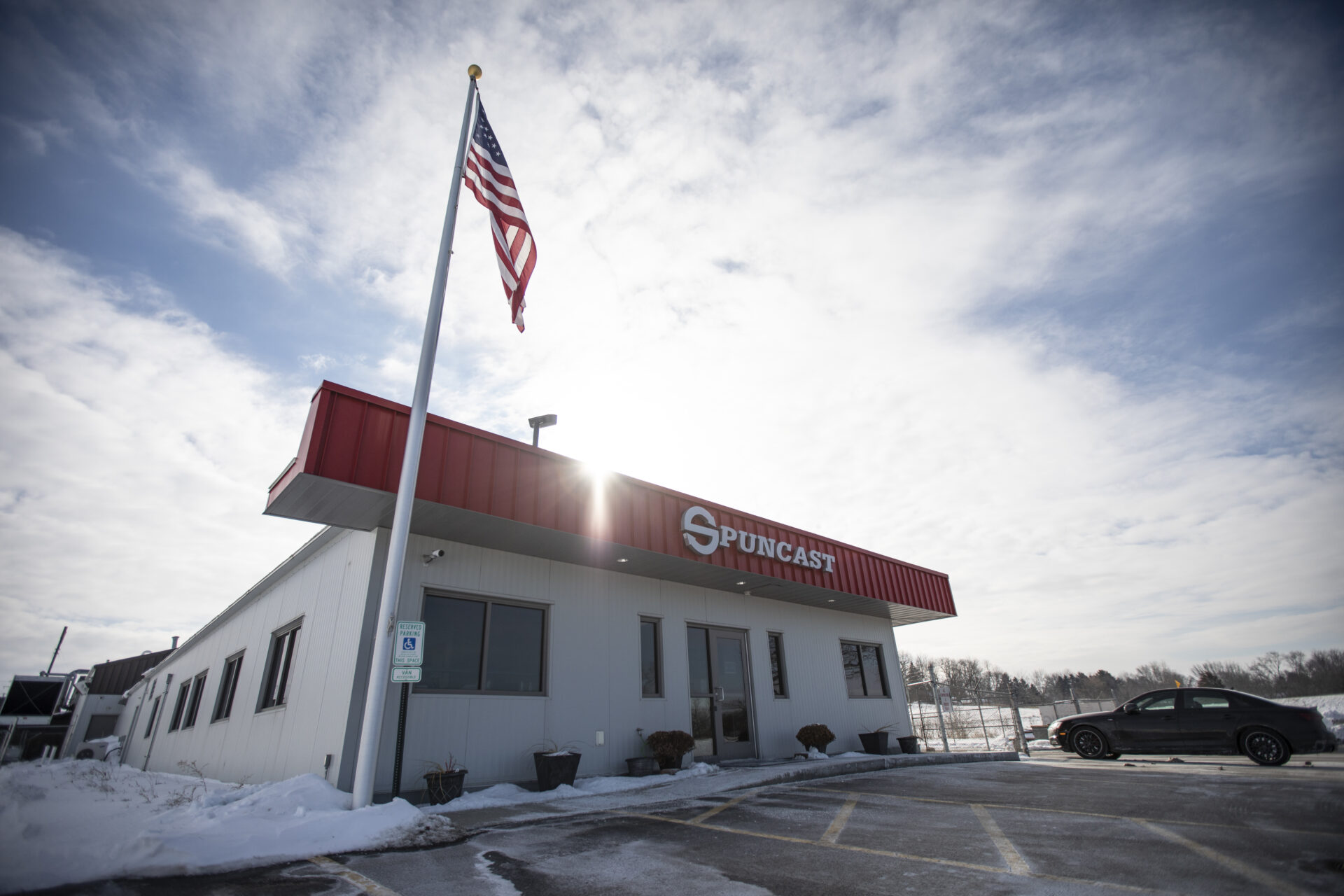
For more than 50 years, Spuncast has focused exclusively on centrifugal casting, producing custom stainless steel tubing engineered for demanding industrial applications. We combine metallurgical expertise, integrated manufacturing, and dependable delivery to help customers improve performance while reducing total cost of ownership.
We provide:
- 50+ years of centrifugal casting expertise
- 200+ standard and custom alloy options
- 1,000+ permanent molds
- 95%+ domestic material sourcing
- 30+ certified material suppliers
- In-house metallurgical support
- Integrated testing, heat treating, machining, and shipping
- ISO 9001 certified quality system
- Lifetime product warranty
- Employee-owned accountability through ESOP ownership
Frequently Asked Questions About 400 Series Stainless Steel
Fundamentals
What is 400 Series stainless steel?
400 Series stainless steel is a family of iron-chromium stainless steels designed for applications where mechanical performance is more important than maximum corrosion resistance. Unlike the 300 Series, many 400 Series grades can be heat treated to increase hardness and strength, making them well suited for components exposed to heavy loading, abrasion, and wear.
The family consists primarily of ferritic and martensitic stainless steels, each offering different advantages depending on the application’s requirements. Spuncast produces centrifugally cast equivalents of many commonly specified 400 Series grades, helping customers match the alloy to the operating environment while taking advantage of the benefits of centrifugal casting.
How do I know if 400 Series stainless steel is the right choice for my application?
400 Series stainless steel is often the right choice when mechanical performance—such as strength, hardness, or wear resistance—is more important than maximum corrosion resistance.
Engineers should evaluate operating conditions, corrosion exposure, weldability, heat treatment requirements, and manufacturing considerations before selecting an alloy. Spuncast’s metallurgical team works with customers to compare material options and recommend the best solution based on application requirements rather than simply selecting the highest-alloy material.
What is the difference between ferritic and martensitic stainless steel?
Ferritic and martensitic stainless steels are both part of the 400 Series family, but they are designed for different performance requirements. Their primary metallurgical differences are their chromium content and alloy chemistry, which produce distinct microstructures and mechanical properties.
Ferritic grades are typically selected when moderate corrosion resistance, dimensional stability, and easier machining are priorities. They are also generally simpler to weld, although both ferritic and martensitic stainless steels can be welded using the appropriate procedures.
Martensitic grades are selected when higher strength, hardness, and wear resistance are required. Because they can be heat treated, they are well suited for components subjected to heavy loading, abrasion, and demanding mechanical service.
The right choice ultimately depends on the application. If corrosion resistance is the primary requirement and the component is not heavily stressed, a ferritic grade may be the better option. If the application demands greater mechanical performance, a martensitic grade is often recommended.
Is 400 Series stainless steel magnetic?
Yes. Most 400 Series stainless steels are naturally magnetic because of their crystal structure. This includes both ferritic and martensitic grades.
For many industrial applications, magnetic properties are simply a characteristic of the material. However, in applications where magnetic response is required, 400 Series stainless steel offers an advantage over most 300 Series stainless steels, which are generally non-magnetic in the annealed condition.
Is 400 Series stainless steel corrosion resistant?
Yes, but its corrosion resistance depends on the specific grade and the service environment.
Ferritic and martensitic stainless steels provide good corrosion resistance in many industrial applications, but they generally do not match the corrosion performance of 300 Series stainless steels in highly aggressive or chloride-rich environments.
When selecting a 400 Series alloy, it’s important to balance corrosion resistance with the mechanical performance required by the application. Spuncast’s metallurgical team can help determine whether a 400 Series grade provides the right combination of corrosion resistance, strength, weldability, and wear resistance.
When should I choose 400 Series instead of 300 Series stainless steel?
Choose 400 Series stainless steel when your application is driven by mechanical performance rather than maximum corrosion resistance.
Many components fail because of wear, impact, or heavy loading—not corrosion. In those situations, the higher hardness and heat-treatable properties of many 400 Series grades can provide longer service life while reducing material costs compared to higher-alloy stainless steels.
If your application operates in highly corrosive environments, however, a 300 Series or duplex stainless steel may be the better choice. Selecting the right alloy depends on balancing corrosion resistance, strength, wear resistance, manufacturability, and cost.
Can 400 Series stainless steel be heat treated?
Many martensitic 400 Series stainless steels can be heat treated to significantly increase hardness, strength, and wear resistance. This is one of the primary advantages that distinguishes martensitic grades from many other stainless steel families.
Ferritic grades, however, are not typically heat treated to increase hardness. Instead, they are often selected for their weldability, moderate corrosion resistance, and stable mechanical properties.
Because heat treatment directly affects final performance, Spuncast performs heat treating in-house to maintain tighter control over hardness, dimensional stability, and overall product quality.
Grade Selection
When should I choose ferritic stainless steel?
Ferritic stainless steels are often selected when weldability, moderate corrosion resistance, and cost are more important than maximum hardness. They contain less carbon than martensitic grades, making them easier to weld while providing reliable performance in many industrial environments.
Typical applications include components exposed to mild to moderate corrosion where high strength and heat-treated hardness are not primary requirements. If your application requires greater wear resistance or mechanical strength, a martensitic grade may be the better choice.
When should I choose martensitic stainless steel?
Martensitic stainless steels are commonly selected for components that require high strength, hardness, and wear resistance. Their higher carbon content allows them to be heat treated, making them well suited for demanding mechanical applications.
Typical uses include valve components, pump sleeves, shafts, wear rings, and other parts subjected to heavy loading, abrasion, or repeated mechanical stress. If weldability is the primary concern, a ferritic grade may be more appropriate.
What is the difference between 410 and 420 stainless steel?
Both 410 and 420 are martensitic stainless steels, but 420 contains more carbon, allowing it to achieve greater hardness through heat treatment.
As a result, 410 is often selected when a balance of strength, toughness, and corrosion resistance is required, while 420 is typically chosen for applications where maximum hardness and wear resistance are the priority.
Spuncast produces cast equivalents of both alloys and can help determine which grade best fits your operating conditions and performance requirements.
How do I select the right 400 Series stainless steel grade?
Selecting the right 400 Series stainless steel begins with understanding your application’s operating conditions. Engineers typically evaluate the required strength, wear resistance, corrosion exposure, weldability, and whether the component will require heat treatment.
Ferritic grades are often selected when weldability and moderate corrosion resistance are priorities. Martensitic grades are typically chosen when higher hardness, wear resistance, and heat-treatable performance are required. Spuncast’s metallurgical team works with customers to evaluate these tradeoffs and recommend the appropriate cast equivalent for each application.
Can Spuncast help convert a wrought specification to a cast equivalent?
Yes. Many engineering drawings specify wrought grades such as 410 or 420 stainless steel. Spuncast can recommend the appropriate centrifugally cast equivalent while maintaining the mechanical properties required for your application.
Our metallurgical team routinely assists customers in converting wrought designs into centrifugally cast components that reduce machining, improve material utilization, and simplify manufacturing.
Performance and Operating Limits
Can 400 Series stainless steel be welded?
Yes, but weldability depends on the specific alloy family.
Ferritic grades generally offer better weldability because of their lower carbon content. Martensitic grades can also be welded, but often require greater attention to welding procedures and post-weld heat treatment to achieve the desired mechanical properties.
Selecting the appropriate alloy depends on balancing weldability with the strength, hardness, and wear resistance required by the application.
Which 400 Series grades offer the best wear resistance?
Martensitic 400 Series stainless steels generally provide the highest wear resistance because they can be heat treated to significantly increase hardness.
Grades such as CA40 are commonly selected for applications involving abrasion, sliding contact, or repeated mechanical wear. The appropriate grade depends on the required balance of wear resistance, corrosion resistance, toughness, and manufacturability.
Is 400 Series stainless steel suitable for high-temperature service?
Some 400 Series stainless steels perform well at elevated temperatures, but suitability depends on the specific alloy and operating conditions.
Factors such as operating temperature, thermal cycling, corrosion exposure, and mechanical loading should all be considered when selecting a material. Spuncast’s metallurgical team can help determine whether a 400 Series alloy is appropriate for your service environment or recommend an alternative material when necessary.
When is 400 Series stainless steel the wrong material choice?
400 Series stainless steel may not be the best choice when maximum corrosion resistance is the primary design requirement. Highly corrosive environments, particularly those involving chlorides or aggressive chemicals, may require a 300 Series or duplex stainless steel instead.
Material selection should always consider the complete operating environment. The best-performing alloy is the one that balances corrosion resistance, strength, wear resistance, manufacturability, and cost for your specific application.
Manufacturing & Centrifugal Casting
Why choose centrifugal casting instead of a forging?
Both forging and centrifugal casting produce high-performance components, but they offer different advantages.
For tubular components, centrifugal casting creates a near-net hollow shape that significantly reduces machining compared to producing a forged solid and removing excess material. This can reduce manufacturing costs, shorten production time, and improve material utilization while still delivering the mechanical performance required for demanding applications.
Why choose centrifugal casting instead of machining from solid bar stock?
Machining tubing from solid bar stock removes a significant amount of material before reaching the finished dimensions. Centrifugal casting produces tubing much closer to the final geometry, reducing machining time, minimizing material waste, and lowering manufacturing costs.
For many tubular components, this results in a more efficient manufacturing process without sacrificing mechanical performance.
Why not simply purchase seamless tubing?
Standard seamless tubing is available only in limited sizes and wall thicknesses. Engineers often must redesign a component or remove substantial material through machining to achieve the required dimensions.
Centrifugal casting allows Spuncast to manufacture custom tubing in diameters and wall thicknesses that closely match the finished part, providing greater design flexibility while reducing machining and material waste.
How does centrifugal casting improve 400 Series stainless steel components?
Centrifugal casting enhances the performance of 400 Series stainless steel by producing dense, high-integrity tubing with fewer internal defects and excellent mechanical consistency.
When combined with the strength, hardness, and wear resistance of the 400 Series family, the process helps improve component reliability while reducing machining, material waste, and total manufacturing cost.
Cost and Sourcing
Is 400 Series stainless steel less expensive than 300 Series stainless steel?
In many applications, yes. Because many 400 Series grades contain little or no nickel, they can offer a lower material cost than comparable 300 Series stainless steels.
However, the lowest material cost does not always result in the lowest total cost of ownership. The right choice depends on the operating environment, required mechanical properties, manufacturing process, and expected service life. Spuncast helps customers evaluate these tradeoffs to identify the most cost-effective solution.
How does centrifugal casting reduce total cost of ownership?
Centrifugal casting helps reduce total cost of ownership by producing near-net tubular components that require less machining and generate less material waste than machining from solid bar stock or many forged components.
When combined with the mechanical performance of 400 Series stainless steel, the process can also extend component life in demanding applications. Integrated heat treating, machining, testing, and logistics further simplify the supply chain and reduce overall manufacturing costs.
What information is needed to quote a 400 Series stainless steel tubing project?
To prepare an accurate quotation, Spuncast typically requests:
- Material specification or preferred alloy
- Outside diameter (OD)
- Inside diameter (ID) or wall thickness
- Finished length
- Quantity required
- Machining or heat treatment requirements
- Applicable industry specifications or certifications
- Drawings, if available
If you’re converting an existing wrought or forged component, our metallurgical team can also recommend the appropriate cast equivalent and manufacturing approach.